

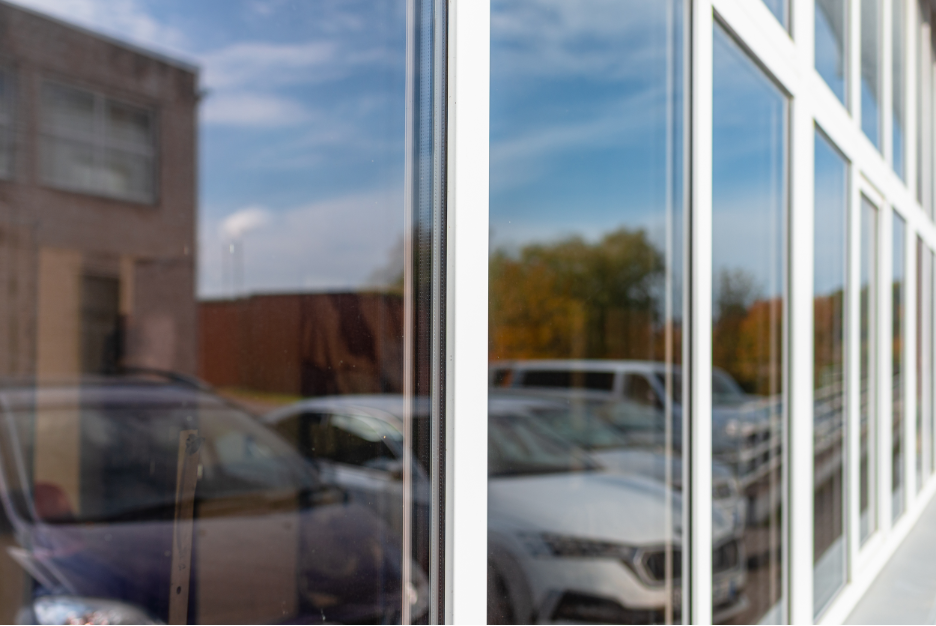
 Commercial glass needs to support safety, visibility, appearance, and everyday function. When glass is used in storefronts, offices, entry areas, interior partitions, display areas, or other business spaces, the type of glass matters because different products are designed to perform in different ways.
Below, this commercial glass replacement contractor in Homewood, Illinois is going to explain the difference between tempered and laminated commercial glass.
What Is Tempered Commercial Glass?
Tempered glass is glass that has been heat-treated to make it stronger than standard glass. This process changes the way the glass responds to stress and impact.
When tempered glass breaks, it is designed to break into small pieces rather than large sharp shards. This is one reason it is commonly used in areas where safety glass is needed.
Tempered glass is often chosen for commercial spaces where strength, visibility, and safety performance are important.
What Is Laminated Commercial Glass?
Laminated glass is made by bonding layers of glass together with an interlayer between them. If the glass breaks, the interlayer can help hold the broken pieces together.
This can make laminated glass useful in commercial settings where glass retention, security, sound control, or added protection is important. Instead of falling apart immediately, the glass may stay more intact after impact.
A commercial glass replacement contractor in Homewood, Illinois can help determine whether laminated glass is appropriate for the location and purpose of the glass.
What Is the Main Difference Between Tempered and Laminated Glass?
The main difference is how the glass is made and how it behaves when damaged. Tempered glass is heat-treated for strength and breaks into smaller pieces when it fails. Laminated glass is built with an interlayer that helps hold broken glass together.
Both are considered safety glass options, but they solve different problems. Tempered glass focuses on strength and breakage behavior. Laminated glass focuses more on holding together after impact.
The right choice depends on where the glass is used and what the business needs it to do.
When Is Tempered Glass Commonly Used?
Tempered glass is commonly used in commercial spaces where stronger glass is needed and where breakage behavior matters. This may include storefront areas, office glass, interior glass features, partitions, display areas, and certain glass panels in high-traffic spaces.
For businesses in the Homewood area, tempered glass may be a practical option when the goal is clear visibility, durability, and safety performance in areas where people move through the building regularly.
The exact use depends on building requirements, glass location, and the surrounding structure.
When Is Laminated Glass Commonly Used?
Laminated glass is commonly used when it is important for glass to stay together after impact. This can be useful in commercial storefronts, security-sensitive areas, interior glass applications, and places where additional protection or sound reduction is desired.
Because the interlayer helps hold broken glass in place, laminated glass may provide extra time and protection after damage occurs. This can be especially helpful when security, weather exposure, or business continuity is a concern.
Laminated glass is often chosen for performance needs beyond basic visibility.
Which Type of Glass Is Stronger?
Tempered glass is generally stronger than standard glass because of the heat-treatment process. It is designed to handle more stress and impact than untreated glass of the same thickness.
Laminated glass may not always be stronger in the same way, but it offers a different kind of protection because the interlayer helps hold the glass together after breakage.
Strength should be evaluated based on the application, not just the glass name.
Which Type of Glass Is Better for Safety?
Both tempered and laminated glass can support safety, but they do it differently. Tempered glass is designed to break into smaller pieces, which can reduce the risk associated with large sharp shards. Laminated glass is designed to remain more intact after cracking or breaking.
In some commercial settings, one option may be preferred over the other based on code requirements, security concerns, traffic patterns, or how the glass is used.
A careful review can help determine which safety glass option makes the most sense.
Can Tempered and Laminated Glass Be Used in the Same Building?
Yes. Many commercial buildings use more than one type of glass. Tempered glass may be used in one area, while laminated glass may be better suited for another.
A storefront, office suite, lobby, interior partition, or display area may each have different performance needs. Some areas may need stronger impact resistance, while others may need better glass retention after breakage.
An experienced commercial glass replacement contractor in Homewood, Illinois can evaluate each glass location instead of recommending one type for every opening.
How Should Businesses Choose Between Tempered and Laminated Glass?
Businesses should choose between tempered and laminated glass based on safety needs, security concerns, location, appearance, building requirements, and how the glass will be used.
It is also important to consider whether the glass is exterior or interior, whether people regularly pass near it, whether the area is exposed to impact risk, and whether the glass needs to remain in place if damaged.
The right choice should support the building’s function as well as its appearance.
What Happens When Commercial Glass Is Damaged?
When commercial glass is damaged, the first step is to secure the area and determine what type of glass was affected. Cracked, shattered, or compromised glass can create safety, security, weather, and appearance concerns for the business.
The replacement glass should match the needs of the space and the performance requirements of the original application. If the damaged glass was tempered or laminated, that detail should be reviewed before replacement.
A professional commercial glass replacement contractor in Homewood, Illinois can inspect the damage and recommend the correct replacement option.
Looking for a Commercial Glass Replacement Contractor in Homewood, Illinois?
Tempered and laminated commercial glass are both safety-focused options, but they work differently. Tempered glass is heat-treated for strength and controlled breakage, while laminated glass uses an interlayer that helps hold damaged glass together. If your business needs help choosing the right product, a commercial glass replacement contractor in Homewood, Illinois can evaluate the glass location, safety needs, and performance goals.
At Glass & Mirror America, we help businesses replace damaged, outdated, or underperforming commercial glass with options that fit the space and purpose of the project. Contact us to compare tempered and laminated glass and choose the right replacement for your commercial property.